
Spray Foam Insulation in Massachusetts & New England
Spray foam seals every gap and crack as it insulates, creating the tightest building envelope available. Our crews apply it in attics, walls, basements, crawl spaces, roofs and commercial buildings, in new construction and retrofits.
- Lower heating & cooling bills, all year
- Less dust, allergens and drafts
- Helps prevent mold and mildew
Get a free spray foam insulation quote
3 quick steps · takes under a minute
Your info stays private. No spam, ever.
Thank you!
We received your request and our team will reach out shortly to schedule your free estimate.
Need us sooner? Call (978) 201-0414
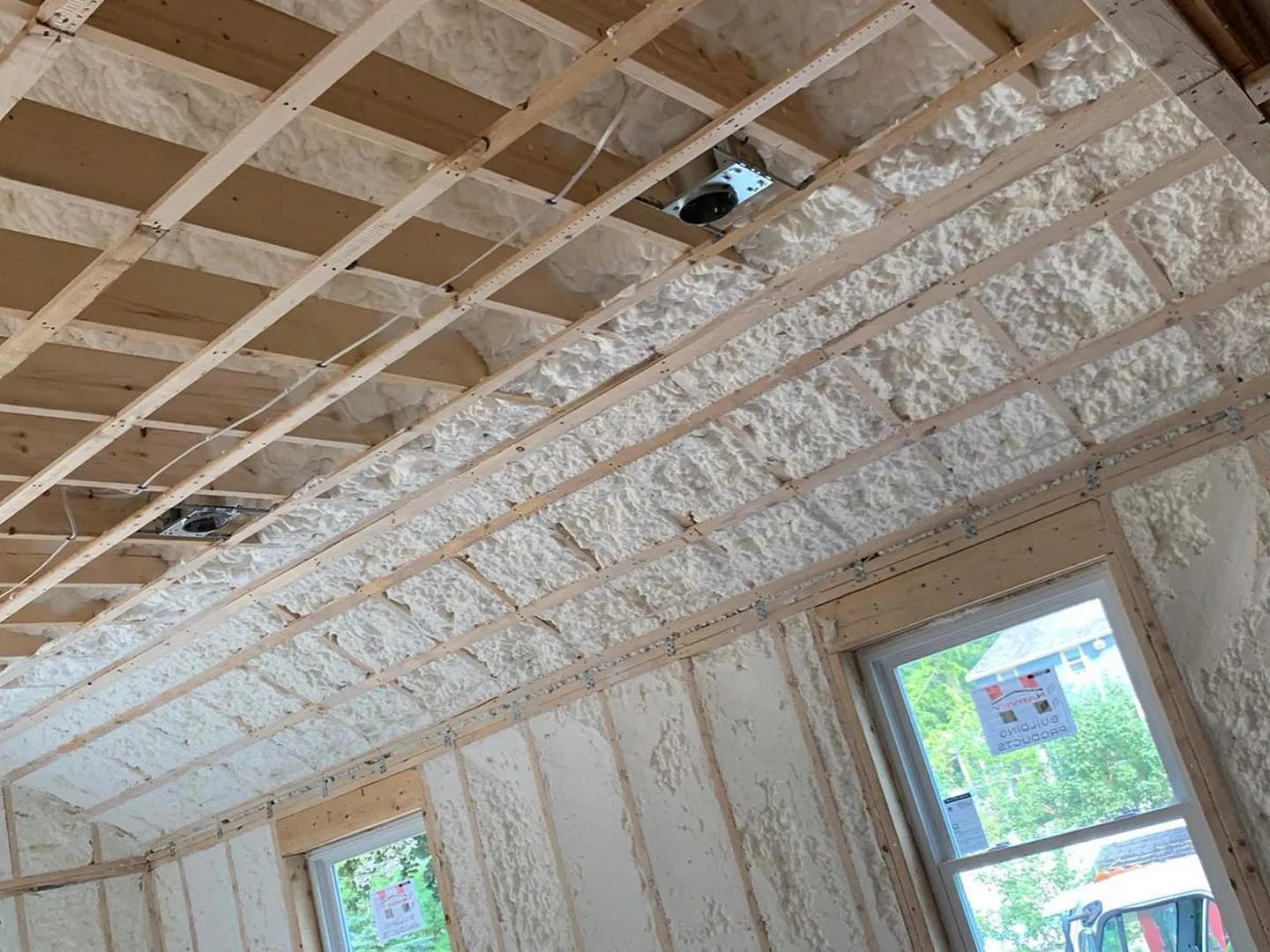
Insulation and air sealing in one step
Designed for weatherizing and retrofitting existing buildings or new construction, spray foam provides consistent thermal performance against outdoor temperatures and helps maintain indoor temperatures. Greater thermal resistance means better temperature control.
- Can reduce the size of the heating & air conditioning system you need
- Reduces airborne dust and allergen infiltration
- Helps prevent mold and mildew
- Environmentally safe and non-toxic
- Energy efficient, strong, durable, lightweight and easy to maintain
The right foam for each part of your building
Not sure which one you need? We'll recommend the best option during your free estimate.
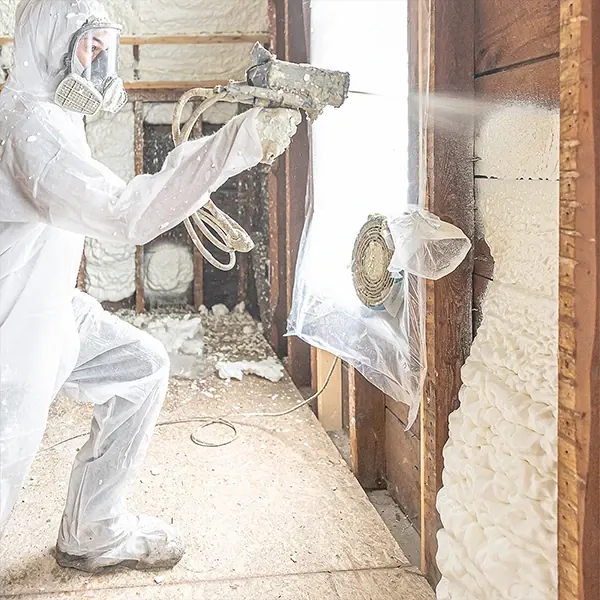
Open-cell spray foam
Soft, flexible foam that expands to fill every cavity. A cost-effective air seal that also dampens sound.
Best for: attics, roof lines, interior walls, sound control
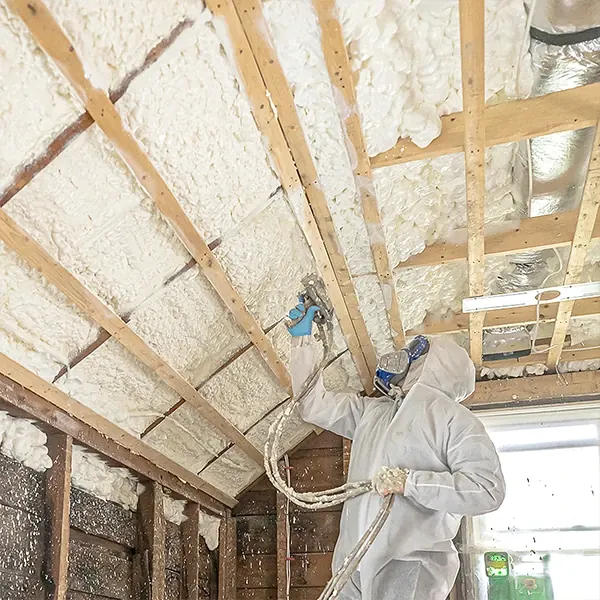
Closed-cell spray foam
Dense, rigid foam with the highest R-value per inch. Adds a moisture barrier and structural strength.
Best for: basements, rim joists, crawl spaces, exterior walls
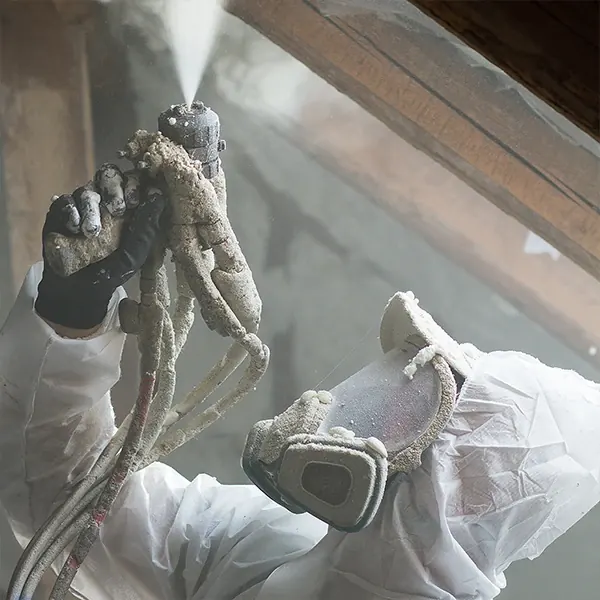
Spray foam roofing
A seamless layer applied to roofs and roof decks that insulates and seals against air and water.
Best for: flat and low-slope roofs, commercial buildings
| Compare | Open-cell | Closed-cell |
|---|---|---|
| R-value per inch (typical) | ≈ R-3.5 to 3.8 | ≈ R-6 to 7 |
| Air seal | Excellent | Excellent |
| Moisture barrier | No | Yes |
| Sound dampening | Better | Good |
| Adds structural rigidity | No | Yes |
| Cost | Lower | Higher |
See the difference our crew makes
Common questions
Is spray foam better than fiberglass?
Spray foam insulates and air-seals at the same time, so it stops drafts that fiberglass lets through. Fiberglass costs less up front and is a good fit for many walls and attics. We'll help you choose the best value for your home.
Should I choose open-cell or closed-cell foam?
Open-cell is a cost-effective choice for attics, roof lines and interior walls, and it helps with sound. Closed-cell has a higher R-value per inch and adds a moisture barrier, making it ideal for basements, rim joists, crawl spaces and exterior walls.
Do you do spray foam for new construction?
Yes. We work with builders and homeowners on new homes and additions across Massachusetts and New England.
How much does spray foam insulation cost?
It depends on the area, the type of foam and the thickness needed. Request a free, no-obligation quote and we'll give you an exact price for your project.
Get a free spray foam estimate
Locally-owned, licensed and insured. 5,000+ projects across New England. We speak English, Portuguese and Spanish.